What solar set-up you running?

BTFIVO

Well-Known Member
Hi all,

I'm looking at supporting and sustaining the electrical system in my caravan. I currently have one 100Ah deep-cycle battery and one solar panel down to a regulator/charge-control box that indicates charge and load of the 12v system. I have a 240v system when connected to mains or generator and the 12v system with vehicle-type female sockets. I also have an anderson plug to the front to connect and either run or charge my vehicles 12v battery. As it stands, my caravan is self sustaining to an extent, but at only a 100Ah battery... not for very long. I do have a 2200w inverter generator as well when out field for either 240v/12v and has provisions for 12v battery charging as well. I would like a larger genset to run my A/C, microwave and every other 240v appliance at the same time, but at the present, this one powers my A/C + a fan well enough. I haven't tried the microwave with the A/C on at the same time yet. That would be about 2600w together I would say.

So, what I would like is two 150Ah batteries with two 150w (or greater) solar panels down to a control-box, to a 300w AC-D/C inverter, then spliced in parallel with 240v to the 240v circuit and 12v to the 12v circuit.

This is just a ball-park figure as if I can find larger capacity solar panels and batteries, I will install them instead. I basically want 240v off solar, self sustaining. I am happy to use my genset for the aircon if I still have to, etc.

I'm pretty sure my A/C is 1800w as the previous owner stated they couldn't run anything else off their 2000w inverter genset. So with a 2000w genset, the nominal output would be 17-1800w depending on manufacturers quality/efficiency. Mine in 2200w and 2000w nominal, which is why I want at least 28-3000w nominal capacity.

To this, what are people running, both set-up and brands. I am looking at buying BP Solar for the system, but have to further enquire on if they have batteries. I've also seen some off-grid 12-->240v systems at exceptional prices on fleabat from china, but not sure of the long term quality. I definitely don't want something that will burn the caravan down..!!! eeep.

Cheers. Pete
 
Last edited:

WillyMaikit

Member
If you really want to go for a stand alone system, i would look at getting 12v or 24v appliances. You have a lot of watts to run with the gear you have.

I'm guessing standard batteries would last quite some time using DC appliances, with only solar recharging.

My concern would be the weight of the batteries for a 240v system.
Decide how many hours/days you want to "stand alone" for, then make the big $$ decision ;)
 
Hi Pete,

I wouldn't recommend trying to go solar only for this type of system. I would go generator only to run your Equipment during the day and recharge the battery and use battery only during the night.

Your going to need a solar farm to run a system of this size to be truly off grid and sustain you system during periods of cloud cover. 300Ah of battery at 50% means you need to push 150Ah back in each day plus support your load which at 3000w means you going to need around 15 x 250w solar panels. As for the batteries, at 3000w with 24v truck batteries, your inverter will pull in excess of 125 A. To get this down, you could look at 48v as your battery array which would halve the current. This would require 4 batteries in a 2 in series x 2 in parallel. Starting to push the boundaries of cost and practicality for a Caravanning context.

The only way I could provide more accurate guidance at this stage is if you provide a detailed breakdown off the power usage per device and how long you will be using them

Have you looked at DC microwaves?

Feel free to have a look at my site for some more details on setting up power systems and the things to consider. The link is below in my signature
 

BTFIVO

Well-Known Member
Thanks guys.

Wow, those figures really shed the light on the true extent of components needed for the small load capability. I would still be happy with 2 x 150Ah DC batteries and 2 x 250w solar panels for the DC side of things. As it stands, I still have not seen my battery level get past 2/3 of its charge (always 2 0f 3 lights indicating battery level). I really don't know as yet as to the size of the panel on the roof, I would say they just slapped on a SuperCheapAuto 70w panel. It certainly takes a while to recharge the 100Ah battery.

I will endeavour to find out the current draw or wattage of the appliances I have.
At present in 240v I have:

* Washing machine
* Oven (1 electric hotplate, rest is gas)
* Microwave
* Blender
* Hot-water-system (both elec and gas - not sure if 12v as well)
* Larger Fridge (both electric 240/12v and gas).
* Calibre LED rechargeable light @ 200 lumens

In the 12v I have:

* Pioneer car stereo with 6 or 8 speakers
* Fan (both 12 & 240v)
* Mobile phone/tablet chargers.
* Waeco 35L free-camp fridge (Both 12 & 240v)

Again, I will try to find out what the power consumption is of each appliance and make a table of the results. I also want to install an Anderson plug to my tow vehicle to both charge and run off the vehicle battery as well. Nice info on the website, Jason. Thanks
 

BTFIVO

Well-Known Member
I have since had another response in a forum, which sounds like what I am after...

" We have gone down the Lithium route with a 200 amp LiFePO4Y battery and in our case 330w solar, MPPT controller (have witnessed 24amps but normally 16 - 20 in full sun) We also have a 25 amp mains charger (C-Tek) which is powered either by mains when van is in grid or by dedicated 600w PSW inverter when hooked up and the tug engine running. This feature is fully automatic with a self switching relay. The battery has a 1200w PSW inverter hooked up with an auto switching relay to power the whole van as soon as it is switched on. This feature is not idiot proof as the power to the battery charger and hot water 230v must be switched off and the AES fridge manually set to gas. One of the best investments we made was a proper battery management system that accurately provides your battery state of charge along with many other features providing easily identifiable info on Amps in and out and Amp /Hrs remaining. We use one of these http://www.aasolar.co.nz/Votronic Bat ... puter.html

Since the lithium installation, we have been able to leave our generator at home and still operate the 230v appliances we have come to enjoy such as Nespresso coffee machine, pop up toaster, hair drier and slow cooker without the fear of the low voltage warning from the inverter. "
 

Traveller

Well-Known Member
There is a great book by Collyn Rivers, called 'The Camper Trailer Book'. A section in it deals with solar systems and power supplies. Certainly worth having a look at.
 
Hi Pete,

An alternate battery like a LiFePO4Y is a good idea for your type of system. Just ensure your charger / solar regulator is designed for this type of battery. Most chargers are set up for lead acid batteries.

Your usage will need too be very specific i.e. Don't use the oven, microwave and washing machine at the same time.
If a product can run on gas, run it on gas
Hook your car to the power system so it will recharge whilst you are towing

Considering your pretty keen, do a google search for wind turbines for yachts. This may help reduce the number of panels you need as it can produce energy during the night.
 

BTFIVO

Well-Known Member
Cheers. I was in Battery World today and they have Powertech. Are they any good? They come with a 25 year guarantee. At present I am looking at 2 x 200W solar panels and 2 x 120Ah drycell deep-cycle batteries. So that'll be 400W of solar and 240Ah of batteries, which I think should do well enough for the 12V, and will upgrade my Generator later.
 
Cheers. I was in Battery World today and they have Powertech. Are they any good? They come with a 25 year guarantee. At present I am looking at 2 x 200W solar panels and 2 x 120Ah drycell deep-cycle batteries. So that'll be 400W of solar and 240Ah of batteries, which I think should do well enough for the 12V, and will upgrade my Generator later.

Hi Pete,
A 25 Year Guarantee sounds sensational, but you battery is likely to last between 5 and 12 years depending on how deep you discharge it. This premature failure is unlikely to be covered by the warranty.
Just a tip - check the fine print.

The rest of your system sounds great.
 
Last edited:

BTFIVO

Well-Known Member
Thanks Jason.

Yeah, after the whole wizz-bang tutorial you gave last time, shedding some detail on the truth of it, it all just seemed too much for the room you have on a typical modern caravan roof.... aka, stuff all. So I opted for something a little more simple. Apparently the digital regulator they have was pretty efficient as well, which is good as we are going 24V panels, regulated to 12V, down to the batteries. The regulator looks after the batteries and somehow recycles the extra power shed from the regulation of the 24V to 12V. Eitherway, I think it will do for the time being an it's already costing around $2450 just for that tiny upgrade.

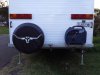
The next modification will be designing a hard-mount frame for my generator to attach to the rear-bar of the caravan. I will mount it on the opposite side of the spare wheel, and incorporate a cover from the elements. All I have to do is attach the plug from the Genset to the 240V-in, then turn the key and have 240V power straight up. The last thing I want to do is be dragging a Genset around everywhere, and or storing it inside the caravan (even during transit) as once they are commissioned, they never stop smelling like Petrol. I would even rather a Diesel Genset, so I only have to buy one type of fuel, and or be able to syphon out of my Jerrycan or diesel tank if I ever ran out
 
Last edited:
Yeah, I'm with you on the generator fuel.

Sounds like you have got a DC/DC converter for a solar regulator, most likely with MPPT Tracking. This will be very good for your system as it will make the system more efficient and will harvest more solar energy for the batteries and load.
 

BTFIVO

Well-Known Member
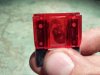
Thought I would update. 6 months sinch I last did anything to the caravan and now getting ready to leave for Cairns, found no power, 5 lights blown and battery dead flat. So investigated a little so far and found the main fuse of 50A blown to hell. So I am wondering what has happened for it to blow. Maybe the solar/manager shorted out or an insect has crawled around and caused a short. So will buy a new fuse and bulbs in the meantime and I also brought the generator online which worked well, managed to recharge the battery a little. So maybe the solar panel failed and ceased recharge of the battery... but not sure as to the blown 50A fuse.

Finally secured the generator to the rear-bar, works great and so convenient. All I need to do is make a cover out of tarpaulin to keep it out of the weather. Trying to repair and make ready to set sail for Cairns by the 3rd July.
 

Attachments

  • PicsArt_1403185686731.jpg
    PicsArt_1403185686731.jpg
    552.6 KB · Views: 230
  • PicsArt_1403185325554.jpg
    PicsArt_1403185325554.jpg
    526.9 KB · Views: 261
  • PicsArt_1403185431201.jpg
    PicsArt_1403185431201.jpg
    494.3 KB · Views: 243
  • PicsArt_1403185470886.jpg
    PicsArt_1403185470886.jpg
    556.8 KB · Views: 236

BTFIVO

Well-Known Member
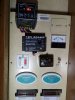
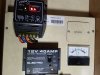
Jason, this is my maintenance/recharge/control system, somehow I don't think it is MPPT and to me looks somewhat outdated..!!?
 
Hi,
Yep, that reg isn't MPPT. It looks like a pretty basic ON/OFF style regulator which isn't ideal in todays environment.
I would proceed a little cautiously given the size of the blown fuse. It would be best to start by isolating parts of the circuit and checking for short circuits.

I would separate the solar reg from the battery and see if it powers up when in the sun.
I would Isolate the BP-400 and measure for short circuits and
I would isolate you loads one by one and check for short circuits.

See how you go with that as a start
 

BTFIVO

Well-Known Member
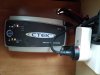
Well, after a good trace of the circuit, I found this near my bed on the other side of the battery bulk-head. So at least I know I have an actual charger however not sure if it is MPPT. So I gather this supplies the van with 240v/12 and also charges the 12v battery as well.

Those other items are the solar charger and battery protector. I tested line with blown fuse and no shorts, then proceeded to install another fuse in. Went well, no blow or spark which surprised me as it's a sunny day and the panel should be producing current. So I guess next step is to see if the panel is actually charging.

I am thinking when I hooked up the caravan I had the parking lights on and therefor instantly brought on the load of all the caravan parking lights (14 of them) and there was a fair spark at the trailer connection to the vehicle upon plugging in. So maybe that surge of current was what blew the fuse but still confused as the fuse was the solar panel fuse. Anyhow, the fault finding continues.
 

Attachments

  • PicsArt_1404096047088.jpg
    PicsArt_1404096047088.jpg
    502.4 KB · Views: 241

Les PK Ranger

4x4 Earth Contributer
Old thread, but looking at this solar regulator thing again . . .

BTW @BTFIVO that is just a charger I think ??

Ok, so perhaps Jason @CampingTechAust or others can clarify their knowledge of this . . .

Hi,
Yep, that reg isn't MPPT. It looks like a pretty basic ON/OFF style regulator which isn't ideal in todays environment.

Always had in mind an mppt controller was just better in all regards (the ctekd25s is mppt), but Googling a bit this morning find a few articles that basically just say the PWM is fine unless you are going up to a higher solar input, ie well over the usual 20v or so you get from one or two small panels.

http://solarcraft.net/articles/comparing-pwm-and-mppt-charge-controllers/
http://www.enerdrive.com.au/mppt-vs-pwm-solar-controllers/
https://www.victronenergy.com/blog/2014/07/21/which-solar-charge-controller-pwm-or-mppt/

So as long as the PWM is amps suitable for what you're putting into it, isn't this all one needs for the usual 4wd only style of travel ?
Eg. touring and wanting to camp 2 - 3 days, keep 2nd battery topped off running a fridge and some basic led lighting.

In fact looking at the fact the PWM is better in moderate to higher operating temps, it might actually be better in many cases for 4WD pursuits.

Obviously if you've got a camper, possibly with inverter requirements, a much larger solar input and mppt controller could be very handy.
For real mppt benefits, your solar input volts needs to be considerably higher than the battery voltage they're hooked up to.

Edit - Meant to add link to a PWM unit (30amps) on ebay, looks pretty good . . .
http://www.ebay.com.au/itm/New-30A-...020855?hash=item1c72acf137:g:rhMAAOSwx2dYJncw
 
Last edited:

sharkcaver

Well-Known Member
A PWM will do the job. An MPPT will just do the job better.

Think of it like this.

A PWM controller just switches off when target voltage is met. When that voltage drops, it switches on again.

An MPPT controller varies voltage/current to suit the target soc and never turns off, tracking the max power point the panel is producing. They claim an input efficiency up to 30% over PWM??? So if you want to extract max efficiency from your panel, MPPT is the way to go.

Whether you would really notice this difference in the field is another question. If the PWM got your battery fully charged at the end of the day, then you would notice no difference at all.

I used an external mppt reg for my camper. Then I got motivated and wired the redarc dc/dc for solar input (no change over relay, just a manual switch). I can not believe the difference i have seen by using this dcdc charger on solar input. I've never had or seen an issue regarding temperature affecting my mppt regulator. I had 2 x over 40 degree days in this pic using a cheap mppt reg and had no issues achieving full charge at the end of the day.


Same goes for the Projecta IDC25 I installed in the car. Both dcdc's in mppt mode just seem to shit all over my mppt dedicated solar regulator. So much in fact, I would consider one of these dc/dc chargers solely for a solar regulator (expensive route though)

Due to the wiring set up, I can not measure the output of these dcdc chargers effectively to compare with real figures from my mppt reg, so the above is seat of the pants observation only.
 

BTFIVO

Well-Known Member
I ended up with a 250W/15A house panel with a VictronMPPT 75/15 controller to a 120Ah AGM battery. This ran my van 24/7 with included a 31L waeco fridge (secondart to 160L dometic LPG), all my lights (converted to LED), water pump, laptop, phone, and 4hours of LCD TV at night. Every morning my battery was at 12.2V (50%) and within 3 hours on a relatively sunny day was on float again. During a week of full heavy cloud (wet season) I needed to run the generator twice for about 1hr each time to get the battery up as it struggled to go over 12.7V. But overall was very surprised. Add another 120Ah battery and would top it off.

I now have 4 x 120Ah AGM batteries with a Morning Star MPPT 30A controller with 2 x Suntech 270W panels and a 1000W pure sign inverter. This runs a 450L LG household inverter refrigerator, my 18V drill charger, phone and laptop and lighting and water pump. Very very impressed. Another 4 batteries and 2 panels next year to upgrade it and run my 59" UHD TV.
 
Top