powered camping noob

pheoninx

New Member
Hey trendsetters,

I have done plenty of camping in my past, however i have typically been in either a big ass fancy motor home on a powered site, or a tent in the middle of nowhere.

As i am in the process of throwing some money into my troopy to make sure its going to be able to cater for both powered and unpowered sites.

Can someone explain this converter/inverter crap to me?

I am going to have a dual battery system for the unpowered sites, but what do i need to put in to enable us to run things like phone chargers (240v) from the battery, and also the same kinds of things when we are hooked up to the 12v powered sites? Im getting mixed answers from all over the shop, and considering im confused enough as it is, this isnt helping. And what way do i need to convert it? 12v to 240? argh..

And can anyone point me in the right direction as to where to obtain said items..

Cheers in advance.
 

Walkabout

Moderator
Firstly an inverter is what you want, depending on your needs a 150 or 300 Watt will be ample for charging battery powered items like phones - laptops - torches etc.
Inverters take 12v DC (direct current) from your car battery and convert it into 240 volt AC (alternating current), of these there are 2 types - Modified sine wave and Pure or True sine wave.
The majority of appliances or chargers will operate unaffected with Modified sine wave, they are usually fine for the task and by far the cheaper of the two options, pure sine wave is generally used for medical equipment or sensitive electrical appliances.
Inverter ratings are measured in run and peak power IE: a marked 150 watt inverter will generally have a peak power of 300 watts, this is helpful as a lot of eletrical appliances require higher current to get started than they do to keep running (florescent light for example)
Inverters run at a loss, meaning they are not 100 percent efficient and usually in the 85-90% range. They also draw large amps from your battery in order to provide the 240v so this should be considered so you purchase a suitable one.
To give you an idea - a 600 watt inverter used to run a 500W power drill may use peak current up to say 800watts to get started then settle to a 500W flow to keep it going, here's the cruncher! whilst doing this it will be consuming in the range of 37 amps per hr from your battery so a 100amp hr battery would last 2.5 to 3 hrs.
This same 600W inverter would be consuming around 650mA (milli amps) whilst turned on in stand by so best to keep em switched off when not in use.

So easy answer is look at the wattage of the items you want to run, take the highest one and double it to get a maximum wattage, buy an inverter close to this number. Don't expect to be able to run your espresso machine unless you want a flat battery real quick;)

To charge phones or anything else that you can get a car charger for etc it is far more efficient to charge them directly by 12V than use an inverter, for the other stuff you feel you must have that can only be charged or run on 240V the inverter is the available option.

Hope this helps and does not just add to the confusion :)
 
Last edited:

Walkabout

Moderator
Oh forgot to mention that ALDI has a 600 Watt for about $59 dollars which is dirt cheap! (if there is any left) normally expect to pay $150-$200 for a good brand 600W
They are not hard to find though, places like Jcar stock a full range and even Bunnings will have them on the shelf.
 

pheoninx

New Member
right.. im kinda with you.. ha ha..

so how does that work for powered sites.. if i use the power from the site, and plug that straight into the inverter, same concept? just unlimited power i guess??

and im guessing its something i just install into the truck, and plug in either the external power, or switch it over to let it run off the truck power?

am i on the right track?

thanks for your help either way..
 

Walkabout

Moderator
If you are at a powered site then you will not use the inverter at all, just plug your stuff into an extension lead from the Parks mains power.
An inverter runs solely off your 12v car battery to provide you 240v power from either 1 or 2 - 240v sockets that are part of the inverter.
If you wish to have a mains style power point in your rig you can have this like what you get in a caravan ( plug an extension lean into the side of the car to feed a power point internally) but it is a totally separate system to that of the inverter. Making sense?
 

Traveller

Well-Known Member
If you fit an inverter then you should run wires for it that are capable of supplying the amps required to run it properly. No good plugging it in to the cigarette lighter socket! Probably put a 30 amp circuit breaker close to the battery you're using, then hard wire the inverter, or use anderson plugs to connect the power supply to it.
As Walkabout says, when at a 240 powered site, just run a decent extension lead from powerpoint to your vehicle/tent/camper and maybe plug it into a power board to give a few outlets.
I've set my rig up to run totally on 12volt, but I can plug a 240 lead in to run the fridge and any chargers I wish too as well.(most are 12 volt anyway).
I've never seen a 12 volt powered site, but would imagine either cig or merit plugs would be used?
Maybe even an Anderson plug?

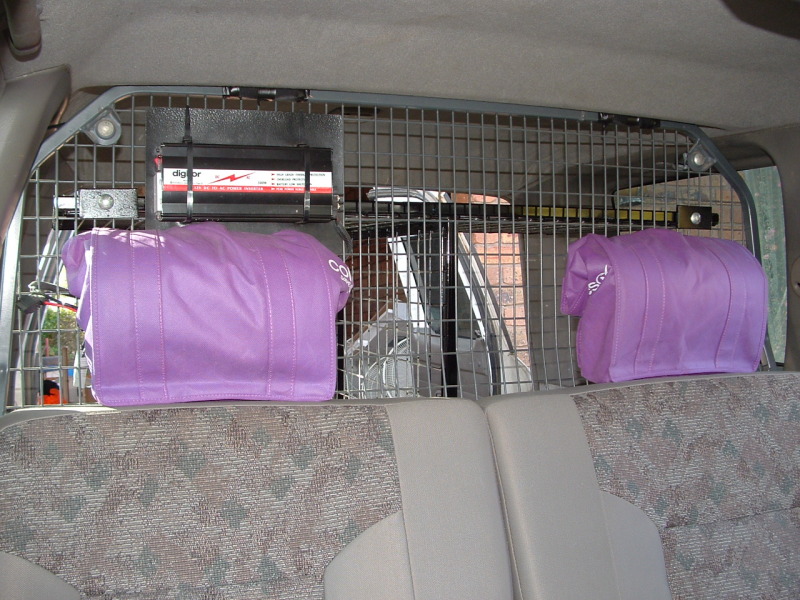
Here is my inverter mounted to the cargo barrier
889113_022.jpg


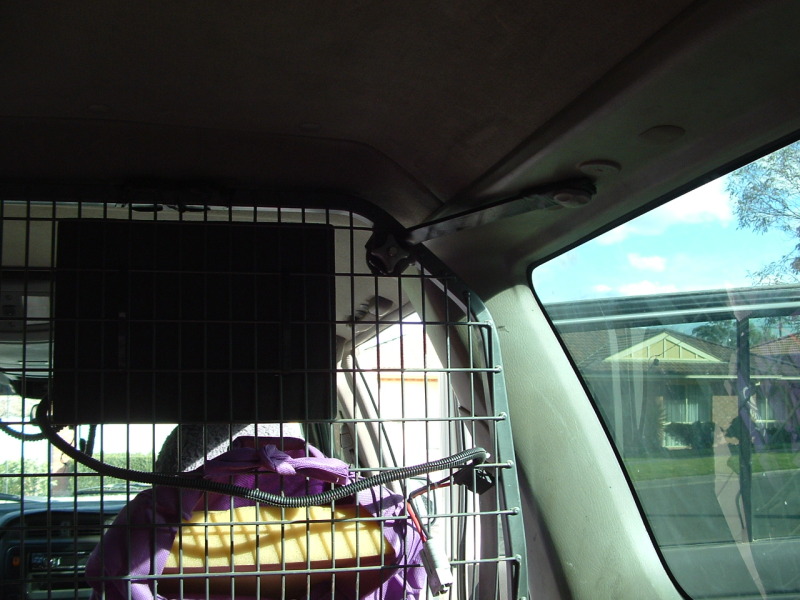
here you can see the anderson plug hanging down ready for me to plug in to the power supply;
573927_002.jpg


please excuse the lovely purple headrests:p
 

prawns

Moderator
In laymans terms a invertor takes a 12volt DC input (eg car battery power) and converts it to 240volts AC so you can run appliances designed to be plugged in at home.

If your already hooked to a 240V powered site, the inverter would do nothing for you
 

billolga

4x4 Earth Contributer
Last edited:

pheoninx

New Member
thanks heaps guys love you work. all over it now..

will get myself an inverter and hook it up with some extra ciggy lighter plugs..

i for some reason just thought powered sites were a different voltage! ah well

thanks again.
 

Rogue

New Member
Be aware that some powered sites will require a 15amp lead. You can get 15amp - 10amp adapter leads (10 amp is your normal power lead, 15amp has a larger spade on the earth) with a built in circuit breaker. Well worth carrying one if you do a lot of powered site camping.
 

profoto

Active Member
As stated earlier if you are wiring for an inverter use a heavy cable, I have rewired some motor homes and caravans and find that they are hopelessly inadequate with a rating barely sufficient to handle the load, this can result in a heat build up in the cable and ultimately a fire.
A long run will also require a heavier cable, don't be afraid to go too heavy, it won't do any damage and if you put on something later that will draw more you will be covered.
If it is a DIY job solder the connections too, crimp is fine until it starts to corrode and you effectively have put a resistor in line, and another heat source.
 
Top