jump starters and car fridges

HollyKate

Member
Forgive me if these are simple questions, pls.
My first is about car fridges:
I have wanted one for a while, but am only just looking into it now. The power source for it bothers me. I have an old car with a good battery and ( I guess like most!) don't want to get stuck far away from civilisation if the battery gets drained by the fridge. Do most people have their fridges connected to their car battery through a dashboard connection like a phone charger, or do most have solar panels and run their fridges off that solely?
Do you have to turn the fridge off / remove from battery connection in car when you turn the car off every time?
I've heard this term thrown around a lot: 'dual batteries'. I know, simple question, right? But if you get two batteries are they both supplying the car with power at all times or is one just solely connected to the fridge or is it just sitting there waiting until the first one packs up until it starts supplying whatever with power?
The volts, amps, types of fridges bla bla bla is annoying me. How have others gone about deciding between what?

The other is jump starter kits: my old one packed up when I forgot to recharge it for about.....one or two years or something???....Thinking about getting one with an air compressor included. Any favourite brands? Or more importantly, INFAMOUS brands?

Any replies very much appreciated, :)
Holly
 

03hilux

4x4 Earth Contributer
You could always set up a second battery. Connect the second battery with a voltage regulator or a DC to DC charger from your main battery. The regulator or charger will allow the second battery to charge, but wont allow the main to discharge. Basically, they act like a one way switch. So you can drawer power from the second battery, but not your main/ cranking battery.

Have a look at things like the Redarc dual battery system or a Matson DC to DC charger.
 

joekar

Active Member
A second battery is the best option for you (and most people) as it will allow you to run your fridge without flattening your starting battery.

In an emergency, it also allows you to jump start your car off the second battery if the first is flat. This isn’t recommended if you want to jump start things all the time, but it certainly works in an emergency – been there, done that!

What sort of vehicle do you have? This may decide where you could site a second battery. Most older vehicles can fit one under the bonnet where it is out of the way and yet within easy reach of the charging system.

My recommendation (which may change depending upon the vehicle you have and any possible other use you may have for the battery) is to fit a second battery under the bonnet. Make it a deep cycle battery and it will run a fridge happily. Charging should be through the use of a DC to DC charger. These are now relatively affordable and provide the best charging solution for your needs. It keeps things simple too – cables run from the main battery to the DC charger, then cables run to the second battery. A final wire needs to go to a power source that is ignition switched. I use a wire to the wiper motor – they only have power running to them when the ignition is switched on – as this is easy and available. This way the charger only connects the two batteries when the ignition is turned on – when it is off they are separate and one can be rub down without affecting the other.

Now you have a second battery that is being properly charged all you need to do is run a couple of cables down the chassis rails to the rear of the vehicle and connect them to a power outlet socket. The cables should be fused of course. You simply plug your fridge into the power outlet.

Plugs – there are lots of good plug designs – I use the Hella pluigs – and it is a good idea to take a look at marine designs as they are secure and provide low resistance (ie the power gets through easily). Do not (I repeat NOT) use the standard ciggy lighter socket – they are next to useless.

Compressor – if you have a second battery then your compressor choice becomes easier. Just make sure you buy one that works properly for 4WD applications where you will be pumping up four big tyres each time you use it.

Hope this helps Holly – stay safe out there and give that GSD a pat on the head for me – love those dogs!
 

HollyKate

Member
Thank you for your extensive info joekar much appreciated. I have a 95 hilux and I will certainly look into the dual battery thanks for explaining the wiring.
My dog Vyvyan says thanks for those pats!
 

PJR NSW

Banned
And another option:

We actually have three batteries. All are Allrounder 105AH batteries. One is dedicated as a standard single car battery. The other two are wired in parallel and used for 4WD accessories like fridges, compressor, extra lighting, radios etc. There is a 200 amp Redarc isolator between these two and the main battery. The standard accessories that come with the car, or are optional extras, remain on the main vehicular battery.

A switch in the console when operated closes the isolator to connect the two accessory batteries to the main battery to provide extra cranking and/or winching current.

Phil
 

joekar

Active Member
Additional – with an 03 Hilux (which is NOT an old car, at least not by 4WD standards) the DC/DC charger is not really needed – look for an isolator/charger like the Redarc that mentioned. It will be much more cost effective.

Why? Well, modern cars have temperature sensitive alternators and as the car runs the charge they put out reduces. With a Redarc style isolator you would simply not get enough charge flowing across to the second battery to charge it reasonably quickly. With the DC/DC charger that correct charge rate will be maintained.

But . . . . with old style alternators like yours the charge rate remains constant and the older isolator will work almost as well as a DC/DC charger. The extra dollars are not worth it – in my opinion anyway.
 

Cavsarge

Member
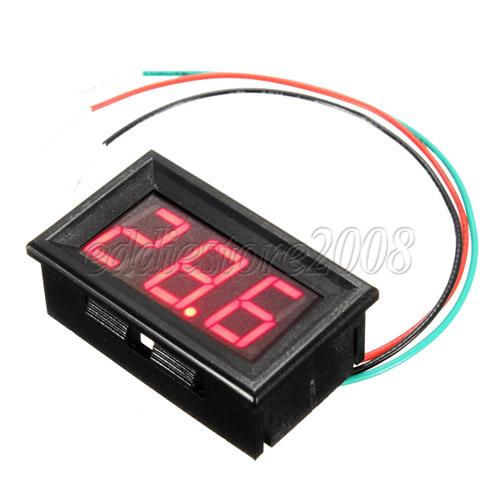
I have gone for a Redarc set up in the lux and have never had a problem even after being static for four days with the fridge running, another option if you don't want to install a dual battery setup is one of the portable power packs like the ARC - one of my mates has one and it seems to be good, one other thing I need to get fitted is a volt meter so I can actually see the state of play with the batteries.
 

PJR NSW

Banned
one other thing I need to get fitted is a volt meter so I can actually see the state of play with the batteries.

You may want to put a small el-cheepo volt meter on the outside of the fridge as well. I also went to the trouble of opening up the fridge and found the 12 v rail and wired it into there.

I run two fridges with three batteries so I wanted just that little bit of extra "insurance" that the fridges are getting enough voltage. Wouldn't want to lose the freezer one half way into a 20 day remote trip.

Just an idea.

Like these from ebay: Digital Mini 5 25V LED Auto CAR Truck Voltmeter Gauge Voltage Volt Panel Meter | eBay

Phil

sku040113_26_1.jpg
 
Top